
Learn how to choose a nursing school by researching factors such as accreditation, NCLEX-RN pass rates, admission requirements, learning options, high-tech nursing labs, and clinical partners. Additionally, ensure the program’s curriculum and tuition rates meet your needs.
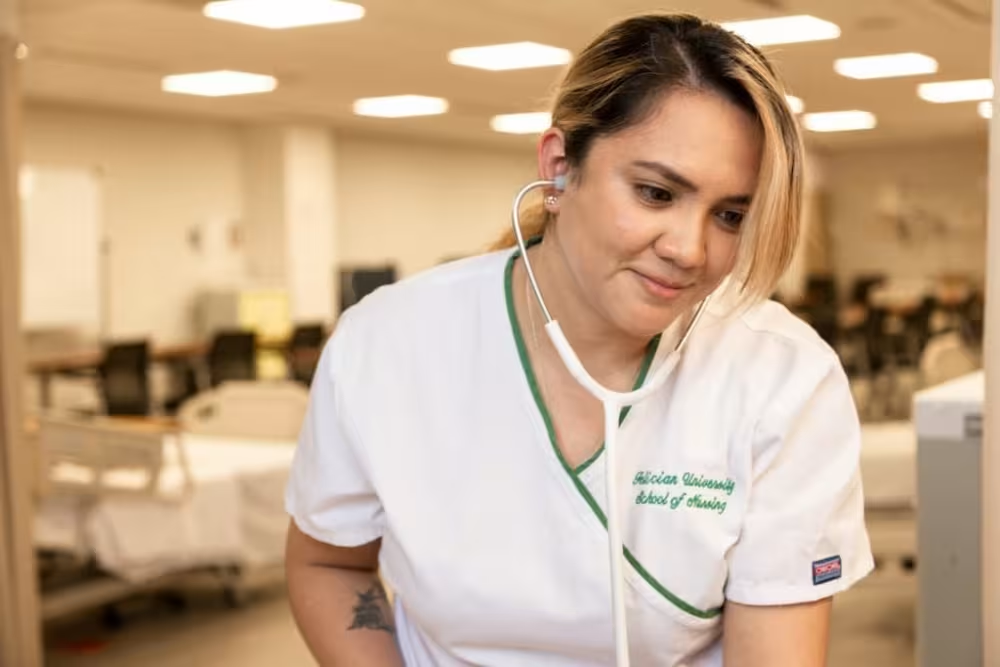
The right nursing program will prepare you to pass the NCLEX-RN licensure exam and help you become an effective patient advocate and nursing leader. Because your choice of nursing school is critical for your future career, you should carefully consider how to choose a nursing school, including what to look for in a nursing program and how to compare your options.
At Felician University, we’ve been delivering academic excellence since 1942. Our Accelerated Bachelor of Science in Nursing (ABSN) program enables students with a non-nursing bachelor’s degree or at least 60 college credits from an accredited institution to earn their Bachelor of Science in Nursing (BSN) in as few as 16 months. You can also choose from two program delivery options: a hybrid program in Parsippany, New Jersey, or an on-ground program in Rutherford, New Jersey.
To learn how to choose a nursing school, you must be aware of the elements that can affect the quality of your education. Consider factors such as the program format, program length, clinical learning opportunities, NCLEX-RN pass rates, and more.
What to Look for in a Nursing Program Before Making Your Decision
As you research BSN programs, assess their quality, learning modalities, and clinical opportunities. In doing so, you can narrow your choices; however, sometimes the best way to determine which school is right for you is to reach out to an admissions counselor.
Factor 1: Accreditation and NCLEX-RN Pass Rates
Accreditation is one of the most important considerations when choosing a nursing school. All nursing programs on your shortlist should be accredited by the Commission on Collegiate Nursing Education (CCNE) or the Accreditation Commission for Education in Nursing (ACEN).
An accredited nursing program provides a quality education that adheres to nationally established standards, designed to safeguard the public by graduating highly competent and capable nurses. Felician University, for example, is accredited by the CCNE and has received approval from the New Jersey State Board of Nursing (BON).
You should also consider the schools’ NCLEX-RN pass rates. Every nursing school graduate must pass the NCLEX-RN to practice as a registered nurse. You can often judge the quality of a nursing program based on its first-time NCLEX-RN pass rates compared to the national averages. In 2025, Felician University ABSN students achieved a first-time pass rate of 92%.

How does an accelerated BSN program work?
Factor 2: Program Format, Schedule, and Flexibility
Program format can significantly impact your time to graduation. For example, if you choose a traditional BSN program, it can take four years to graduate, which would not be ideal for non-traditional students. If you have a non-nursing bachelor’s degree or college credits, then an accelerated BSN program might be best for you.
You’ll also need to consider whether the start dates fit your ideal schedule. Programs that offer multiple start dates a year could mean you can start nursing school quickly. At Felician, the hybrid ABSN offers three start dates a year in January, May, and September, while the on-ground program offers one start date in September.
You should also consider the learning modality. Many accelerated programs, including Felician’s hybrid ABSN, offer a hybrid online approach, in which you complete online coursework and attend in-person experiential learning components. This hybrid format offers students greater flexibility in when and where they complete coursework, provided they meet deadlines.
Alternatively, if you learn best in person in a classroom setting, an on-campus program might be a better fit. At Felician University, ABSN students have both options.
Factor 3: Clinical Experience and Hands-On Training Opportunities
When considering what to look for in a nursing program, don’t overlook the importance of clinical and hands-on learning opportunities. You should choose a nursing program that has both nursing skills and simulation labs. Skills labs teach fundamental nursing skills, like nasogastric intubation. In simulation labs, you’ll develop clinical reasoning and problem-solving skills as you work through simulated patient care scenarios.
It’s ideal to choose a school that offers high-tech medical manikins. These manikins simulate life-like functions, like a heartbeat. At Felician University, our high-tech medical manikins can even experience allergic reactions and offer verbal responses. You will practice everything from responding to cardiac arrest to assisting in labor and delivery.
Every nursing school includes clinical rotations in its curriculum. These are placements at healthcare facilities, where you will provide direct patient care under the supervision of healthcare staff and instructors.
You should choose a nursing school that partners with a leading healthcare facility for clinical rotation placements. Felician University is pleased to partner with the Atlantic Health System and other leading healthcare providers. Our students gain experience in a variety of practice areas, including:
- Adult health
- Maternal-newborn
- Mental health
- Pediatrics
Factor 4: Tuition, Financial Aid, and Total Cost
Tuition and fees vary significantly across programs. No matter where you attend, nursing school is an investment that requires careful financial planning. When comparing costs across nursing schools, be sure to consider tuition rates and fees.
When you find a nursing program within your budget, you must identify ways to pay for nursing school. Federal direct loans, private loans, and scholarships are among the most common forms of payment. You can reach out to your chosen school’s financial aid office for help in navigating your options.

Is accelerated nursing school worth it? Use these questions to help you decide if nursing school is right for you.
Factor 5: Admission Requirements and Your Chances of Acceptance
Every nursing program has its own set of admission requirements. Commonly, schools will consider an applicant’s:
- Cumulative GPA
- Entrance exam scores
- Prerequisite grades (if applying to an accelerated program)
At Felician University, our admission counselors can review your eligibility and develop a personalized plan for meeting the requirements.
Factor 6: Career Outcomes, Job Placement, and Support Services
When you speak with an admission counselor, it’s helpful to ask about the school’s career outcomes and job placement services. For example, there might be an alumni network you can tap into.
Keep in mind that clinical rotations provide invaluable opportunities for professional networking. Some students may make a great impression and receive a job offer before graduation.
You should also ask about the student support services available in the program. Felician University, for example, offers thorough NCLEX-RN prep to help our students pass the licensure exam.
How to Compare Nursing Schools and Make the Right Choice
Even after knowing what to look for in a nursing program, it might not be easy to make your decision. Consider creating a spreadsheet or document that compares your schools on variables such as NCLEX-RN pass rates, admission requirements, and learning flexibility.
You can also add notes about the initial impression you received when speaking with the admission counselor. During this call, remember to ask all your questions about the school and program, such as:
- Is there a waitlist?
- What does the curriculum emphasize?
- What do you look for in prospective nursing students?
After considering all relevant factors, ask yourself which school will be most effective at helping you become a practice-ready nurse.
Ready to Apply to Our Nursing Program?
If you have a non-nursing college education and want to accelerate into the nursing profession, Felician University’s ABSN program in New Jersey may be right for you. You can choose from two dynamic learning options: our On-Ground ABSN at our main campus in Rutherford, New Jersey, and our Hybrid ABSN learning site in Parsippany, New Jersey.
With both options, you can graduate in as few as 16 months while benefiting from a comprehensive, values-based curriculum. Request info today to get started.