
Labor and delivery nurses care for patients during and after labor and childbirth. If you’re interested in how to become a labor and delivery nurse, start by applying to nursing school. You’ll need a nursing degree and an RN license to apply to positions as a labor and delivery nurse.

You can become a labor and delivery nurse by earning a nursing degree and passing the licensure exam. Labor and delivery (L&D) nurses are registered nurses (RNs) who provide care to patients during labor and childbirth. As members of a collaborative team, labor and delivery nurses monitor patients, respond to signs of potential complications, and assist during childbirth.
If you’d like to learn how to become a labor and delivery nurse, you can start your journey at Felician University. Our Accelerated Bachelor of Science in Nursing (ABSN) program, offered online or on campus, lets you earn a Bachelor of Science in Nursing (BSN) in as few as 16 months. You will gain hands-on experience in maternal and newborn care through clinical rotations.
Learn the answers to common questions such as “What do labor and delivery nurses do?” and “How much does a labor and delivery nurse make?” Explore the requirements and steps to pursue this nursing specialty.
What Is a Labor and Delivery Nurse, and What Do They Do?
L&D nurses are integral to obstetrics. They provide care throughout labor and delivery and continue caring for the mother and baby afterward.
What do labor and delivery nurses do during a typical shift? Working alongside nurse midwives and obstetricians, L&D nurses may do the following:
- Administer medications, including epidurals
- Assist during the delivery
- Deliver patient education by helping parents learn to care for their newborn
- Monitor fetal and maternal vital signs
- Prepare patients for emergency procedures, such as Cesarean sections (C-section)
- Provide emotional support to patients and family members
- Time the contractions
L&D nurses also serve as patient advocates. They listen to patients’ concerns and preferences, ensure that birth plans are honored, and explain necessary deviations when complications arise.

Explore the evolution of technology in nursing.
Where Do Labor and Delivery Nurses Work?
Labor and delivery nurses often work in hospital maternity or obstetrics departments, but they may also work at birth centers, which provide dedicated, patient-centered labor and delivery care.
Patients with low-risk pregnancies sometimes choose home births. Working alongside midwives, L&D nurses may guide women through labor and delivery at home while staying alert for complications that require transfer to a hospital.
Labor and Delivery Nurse Requirements
If L&D nursing appeals to you, start by meeting the labor and delivery nurse requirements at Felician University. You’ll need a nursing degree, such as an associate degree in nursing (ADN) or a BSN, and to pass the NCLEX-RN licensure exam to obtain a nursing license.
L&D nurses also typically need the following certifications:
- Advanced cardiac life support (ACLS)
- Basic life support (BLS)
- Neonatal Resuscitation Program (NRP) certification
How to Become a Labor and Delivery Nurse: Step-by-Step
Your first step to becoming a labor and delivery nurse is earning a nursing degree.
Earn a Nursing Degree
You can enter L&D nursing with an associate degree, but a BSN is preferred because it provides a more comprehensive education and lays a foundation for graduate studies. Individuals with a high school diploma can enroll in an associate degree or traditional BSN program; however, those with a non-nursing bachelor’s degree or college credits may be eligible for an accelerated BSN program, such as Felician’s ABSN program.
Accelerated programs offer the same quality of education as traditional BSNs but leverage students’ academic history to help them graduate faster. Many accelerated programs allow students to graduate with a BSN in less than two years.
While each school’s specific curriculum varies, you can expect to complete nursing theory coursework and hands-on experiential learning. In Felician’s ABSN program in New Jersey, students participate in:
- Nursing theory coursework
- Nursing skills and simulation labs
- Clinical rotations
Students also have the choice between the Hybrid ABSN option in Parsippany, New Jersey, that combines online coursework with in-person labs and clinicals, and the entirely in-person On-Ground ABSN program in Rutherford, New Jersey.
Pass the NCLEX-RN Exam and Become Licensed
After graduating, you can apply for authorization to test (ATT) and schedule your NCLEX-RN exam. Most nursing students take the exam within a month or two of graduation to keep the material fresh. Once you pass, you can obtain your state-issued RN license.
Gain Clinical Experience in Maternal or Neonatal Care
L&D is an entry-level specialty, so you may pursue a job in obstetrics or maternal units immediately after licensure. If no positions are available, consider working in a well-baby unit to gain neonatal experience.

Learn how to get into nursing school with actionable tips and factors to consider.
Pursue Specialized Certifications
After gaining experience as a labor and delivery nurse, you may wish to pursue additional certifications beyond BLS and NRP. One option is the Inpatient Obstetric Nursing (RNC-OB) from the National Certification Corporation. Eligibility requires at least two years of specialty practice and 2,000 hours of L&D experience.
Essential Skills for Labor and Delivery Nurses
Key clinical skills for L&D nursing include:
- Electronic fetal monitoring
- Emergency interventions, such as the McRoberts maneuver for shoulder dystocia
- Maternal assessments
- Pain management
- Patient education
Important soft skills for an L&D RN include:
- Adaptability
- Alertness and concentration
- Attention to detail
- Creative problem-solving
- Critical thinking skills
- Emotional resilience
- Patient advocacy
- Patient education
- Teamwork
How Much Does a Labor and Delivery Nurse Make?
The labor and delivery nurse salary depends on experience, certifications, employer, and location. The median annual salary for all RNs was $93,600 in May 2024, according to the U.S. Bureau of Labor Statistics (BLS). Although the BLS doesn’t track salary data specifically for L&D nurses, the overall median wage offers an estimate of potential earnings.
Is Labor and Delivery Nursing the Right Career for You?
L&D nursing could be ideal if you want a varied specialty. In a single shift, you might care for a high-risk patient, assist with surgery, and serve as a postpartum educator.
This specialty suits those who thrive in fast-paced, high-pressure settings. You must be ready to address life-threatening hemorrhaging or fetal distress and handle grief and trauma. Emotional resilience and calmness under pressure are essential.
While there are emotional challenges, L&D nursing is an immensely rewarding career that allows you to make lasting and meaningful connections with patients.
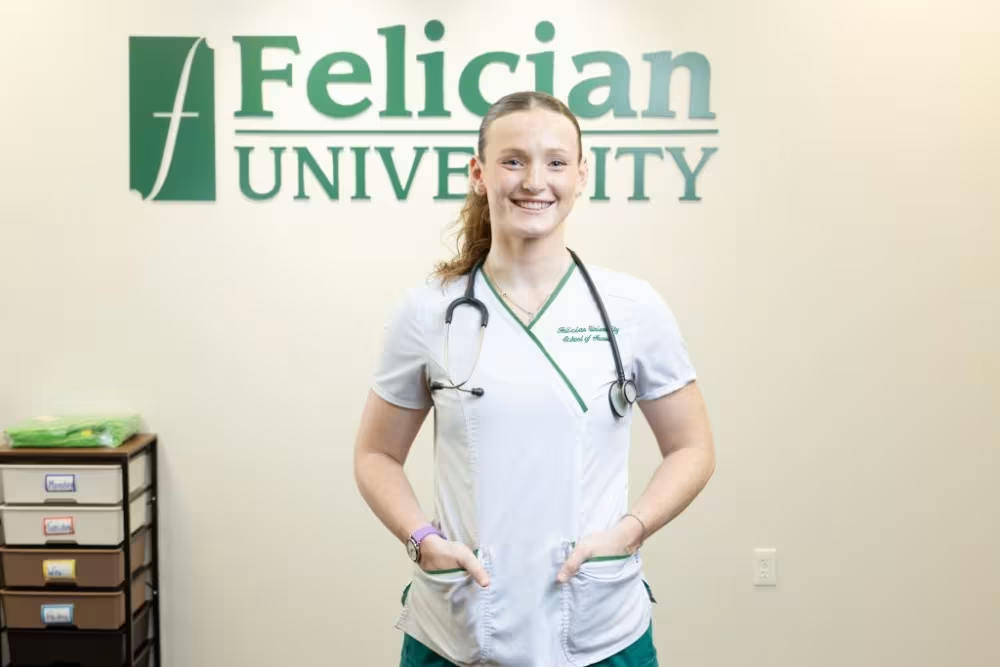
Start Your Labor and Delivery Nursing Journey at Felician University
Felician University has a longstanding history of providing comprehensive student support to facilitate academic success in the nursing field. With a practice-ready focus, our values-based curriculum enables graduates to apply compassion and ethical decision-making to nursing practice.
If you have at least 60 non-nursing college credits, you may be eligible for our Hybrid ABSN program in Parsippany, New Jersey, or our On-Ground ABSN program at our main campus in Rutherford. You can graduate in as few as 16 months and be well-prepared to take the NCLEX-RN.
Request info and connect with an admissions counselor at Felician University today.